How I Balanced Luxury Dreams with Smart Money Moves — A Beginner’s Asset Play
You love nice things — designer bags, premium watches, dream vacations. So do I. But chasing luxury without a plan nearly derailed my finances. I learned the hard way that spending big doesn’t mean going broke. The key? Treating every splurge as part of a bigger financial picture. This is how I stopped feeling guilty about luxury purchases — and started making them work for my wealth, not against it. What began as a series of impulsive rewards slowly turned into a pattern of stress, missed savings goals, and quiet anxiety every time I checked my bank balance. It wasn’t the luxury that was the problem — it was the lack of strategy. Over time, I discovered that with the right mindset and structure, enjoying high-end items doesn’t have to compromise long-term security. In fact, when approached wisely, luxury spending can coexist with smart financial growth. This is not about deprivation, nor is it about reckless indulgence. It’s about alignment — aligning desire with discipline, emotion with planning, and consumption with value creation.
The Luxury Trap: When Upgrading Feels Good but Costs Too Much
It starts innocently enough — a promotion, a milestone, or simply the need to treat yourself after a long stretch of hard work. You step into a boutique, admire a beautifully crafted handbag, and tell yourself you’ve earned it. The purchase feels like a win, a symbol of progress. But weeks later, that same bag sits unused in your closet, and your credit card statement tells a different story: one of delayed savings goals, tighter monthly budgets, and a lingering sense of regret. This is the luxury trap — when emotional spending masquerades as self-reward but quietly undermines financial stability.
Many beginners fall into this cycle because luxury items are designed to evoke desire, not financial reflection. Marketing campaigns highlight exclusivity, craftsmanship, and status, rarely mentioning resale value, depreciation, or opportunity cost. As a result, consumers often overlook the long-term impact of short-term gratification. Lifestyle inflation — the tendency to increase spending as income rises — becomes a silent budget killer. A raise leads to a new watch, which leads to a pricier vacation, which then pushes retirement contributions further out of reach. Each decision feels justified in isolation, but collectively, they erode financial resilience.
Social pressure amplifies the trap. Seeing peers post about their latest acquisitions on social media can trigger a sense of urgency or inadequacy. The fear of missing out isn’t limited to experiences — it extends to possessions. But luxury spending driven by comparison rarely brings lasting satisfaction. Instead, it fuels a cycle of chasing the next high, each purchase delivering diminishing emotional returns. The temporary thrill fades, but the financial burden remains. Without a framework to evaluate whether a luxury item aligns with broader financial goals, spending becomes reactive rather than intentional.
The solution isn’t to eliminate luxury — it’s to redefine it. Luxury should not be a source of guilt or financial strain. It should be a deliberate choice, integrated into a balanced financial life. This begins with recognizing that not all spending is equal. Some expenses drain value; others, when chosen wisely, can preserve or even enhance it. The shift from impulsive to intentional spending starts with awareness — understanding that every purchase is a financial decision with ripple effects. Once you see luxury not as an indulgence but as a potential component of your financial strategy, you gain the power to enjoy it without sacrificing security.
Asset Allocation Isn’t Just for Investors — It’s for Shoppers Too
When most people hear “asset allocation,” they think of investment portfolios — dividing money among stocks, bonds, and cash based on risk tolerance and goals. But the principle of allocation applies far beyond Wall Street. At its core, asset allocation is about distributing resources in a way that balances risk, return, and purpose. This same logic can transform how you approach spending, especially when it comes to luxury purchases. Every dollar you spend is a resource, and how you allocate it determines whether it vanishes or retains value over time.
Traditionally, luxury items are categorized as expenses — immediate outflows with no expectation of return. But this view is too narrow. An asset, in financial terms, is anything that holds or increases in value. By broadening this definition, certain luxury purchases can be reclassified not as liabilities, but as potential assets. A well-maintained timepiece from a reputable brand, for example, may depreciate slowly or even appreciate if it’s a limited edition. A high-quality leather jacket, cared for over decades, delivers years of use and style, spreading its cost over many wears. These items generate value over time, much like a dividend-paying stock provides ongoing returns.
The key is intentionality. Just as an investor diversifies across asset classes to reduce risk, a smart spender diversifies across spending categories to optimize value. This means allocating a portion of discretionary income not just to consumption, but to items that offer durability, utility, and potential resale value. It’s not about buying more — it’s about buying better. A $3,000 watch that lasts 20 years and retains half its value is a different financial proposition than five $600 watches replaced every four years, each losing value immediately upon purchase.
This mindset shift transforms spending from a zero-sum game into a strategic decision. Instead of asking “Can I afford this?” the better question becomes “How does this fit into my long-term financial picture?” By applying asset allocation principles to personal spending, you create a framework where luxury is not an exception, but a calculated part of your financial plan. Over time, this approach builds not just a wardrobe or collection of items, but a portfolio of value-preserving assets that reflect both taste and financial wisdom.
From Liability to Asset: Rethinking What Luxury Actually Is
Not all luxury items are created equal. Some lose nearly all their value the moment they leave the store, while others maintain or even grow in worth over time. The difference lies in understanding what turns a purchase into a liability versus a potential asset. A liability is something that drains money continuously — it depreciates, requires upkeep, or offers little utility. An asset, conversely, preserves or increases value, either financially or personally. The goal is to identify which luxury items fall into which category and make choices accordingly.
Consider two examples: a limited-edition mechanical watch from a heritage brand and a trendy designer handbag from a fast-fashion luxury house. The watch, crafted with precision and built to last generations, may retain 70% of its value after a decade if properly maintained. It can be passed down, sold, or enjoyed for years without significant loss. The handbag, while stylish and desirable today, may lose half its value within the first year and become nearly unsellable in five. It serves an emotional purpose but offers minimal financial return. Both are luxury items, but only one has the potential to be an asset.
Yet value isn’t purely monetary. Emotional return on investment (ROI) matters too. A piece of art that brings daily joy, a vacation that strengthens family bonds, or a high-performance appliance that saves time and energy all contribute to well-being. These intangible benefits are real and should be considered part of the asset equation. The challenge is balancing emotional satisfaction with financial prudence. A luxury purchase that delivers both — lasting utility and personal meaning — is the ideal outcome.
To make smarter choices, ask three questions before buying: Will I use this regularly? Can it be resold or passed on? Does it replace multiple lower-quality items? A cashmere coat worn weekly over ten years has a far lower cost-per-wear than several cheaper coats replaced every few seasons. A high-end blender that lasts 15 years eliminates the need for frequent replacements and repairs. These are not indulgences — they are investments in quality of life. By shifting from a mindset of consumption to curation, you begin to see luxury not as excess, but as intentional selection. This reframing allows you to enjoy premium items without guilt, knowing they serve a purpose beyond momentary pleasure.
The 50/30/20 Rule Meets Luxury Spending — A Real-World Test
The 50/30/20 budgeting rule is a widely accepted framework: 50% of income to needs, 30% to wants, and 20% to savings and debt repayment. It’s simple, flexible, and effective for many. But when it comes to luxury spending, the standard model often falls short. The “wants” category is broad — it includes everything from coffee runs to international travel — and without further breakdown, it’s easy for high-ticket items to crowd out other discretionary spending or even spill into savings. The solution is not to abandon the rule, but to adapt it to accommodate aspirational goals without sacrificing discipline.
Take the case of Maria, a 42-year-old professional who wanted to buy a luxury timepiece she had admired for years. Under the traditional 50/30/20 model, the $4,000 purchase would consume nearly half her monthly “wants” budget. Doing so would mean cutting back on dining out, hobbies, and small pleasures for months — hardly a sustainable or enjoyable approach. Instead, she modified the framework by creating a subcategory within her 30% wants allocation: “Aspirational Purchases.” She dedicated 8% of her total income — about $600 per month — to a dedicated savings account for future luxury items. This allowed her to save for the watch over seven months without disrupting her lifestyle or financial goals.
The adjustment worked because it preserved the integrity of the original rule while adding structure to discretionary spending. Her needs and savings remained untouched. Her remaining 22% of wants — covering dining, entertainment, and smaller indulgences — stayed intact. The difference was in timing and intention. Rather than an impulsive buy, the watch became a planned milestone. The waiting period also served as a filter — if she still wanted the item after months of saving, it was likely a meaningful purchase, not a fleeting desire.
This approach fosters financial mindfulness. By tracking her aspirational fund, Maria gained visibility into how her luxury goals fit within her broader budget. She began to prioritize items with lasting value, knowing they required real sacrifice and time to acquire. Over time, this method reduced impulse spending and increased satisfaction with each purchase. The 50/30/20 rule, when adapted with intention, becomes a tool not for restriction, but for empowerment — allowing room for luxury without compromising financial health.
Timing the Splurge: Why When You Buy Matters More Than What
Most people focus on what they buy when it comes to luxury spending. But timing is just as critical — if not more so. A well-timed purchase can save thousands, preserve budget space, and even turn a luxury item into a better financial decision. The difference between buying a designer bag at full price in January versus during a seasonal sale in July can be 30% or more. For high-ticket items, that’s a significant saving that could fund future goals or reduce financial strain.
Strategic timing also involves understanding depreciation curves. Most luxury goods lose the steepest percentage of their value the moment they are used. Buying pre-owned or waiting a year after release can yield the same item at a fraction of the cost, with minimal difference in condition. A watch that retails for $5,000 new might be available in excellent condition for $3,800 after 12 months — a 24% reduction without sacrificing quality. This approach turns patience into a financial advantage, allowing buyers to access premium items without paying the full premium.
Another timing strategy is aligning purchases with income cycles. Bonuses, tax refunds, or side income provide natural opportunities to make larger purchases without disrupting regular cash flow. By waiting for these influxes, buyers avoid debt and maintain monthly budget stability. A $2,500 vacation funded by a year-end bonus has a different financial impact than one charged to a credit card with 18% interest. The former enhances enjoyment; the latter creates long-term burden.
Delayed gratification also serves as a psychological filter. When a purchase requires waiting, it forces reflection. Is this item truly important? Will it bring lasting joy? Many impulsive desires fade over time, revealing themselves as fleeting wants rather than meaningful needs. The six-month waitlist for a popular handbag, often seen as a frustration, can become a forced savings plan and decision-making tool. By the time the bag is available, the buyer may realize they no longer want it — or, if they do, they’re more committed to the purchase. In either case, the delay leads to better outcomes. Timing, therefore, is not just about saving money — it’s about gaining clarity and control.
Tracking Value: The Hidden Skill Behind Smart Luxury Spending
Once a luxury item is purchased, most people stop thinking about it financially. They enjoy it, store it, or wear it — but rarely measure its ongoing value. Yet tracking what your purchases do *after* the transaction is one of the most powerful tools for improving future decisions. Without feedback, it’s impossible to know whether a splurge was worth it. Did you wear that coat 50 times last winter? Has the watch become a daily staple or a weekend-only accessory? How many times did you use the high-end kitchen appliance versus the old one it replaced?
Simple tracking methods can provide this insight. One effective approach is cost-per-wear analysis: divide the purchase price by the number of times you use the item. A $1,200 coat worn 60 times over three winters costs $20 per wear — a reasonable investment. The same coat worn only five times costs $240 per wear — a poor return. This metric transforms abstract spending into tangible value, helping you distinguish between meaningful purchases and underused regrets.
Emotional satisfaction can also be tracked. Rate each luxury item on a scale of 1 to 10 for joy, utility, and pride of ownership. Revisit the rating after six months. Did the item live up to expectations? Did the initial excitement fade? This data helps identify patterns — perhaps you consistently overvalue status-driven purchases but underappreciate comfort-focused ones. Over time, this awareness leads to better alignment between spending and personal values.
Resale value tracking adds another layer. Monitor how much an item could sell for after one, two, or five years. This reveals which brands, models, or categories hold value best. A handbag from a brand known for strong secondary market demand will retain more value than one from a trend-driven label. This information informs future buying decisions, steering you toward items that offer both enjoyment and financial flexibility. By treating each luxury purchase as a mini-investment to be reviewed, you cultivate a mindset of accountability and intentionality. The result is not less spending — but smarter spending, grounded in real data rather than impulse.
Building a Lifestyle That Lasts — Without Breaking the Bank
True financial success isn’t measured by how much you deny yourself, but by how well your life reflects your values without compromising your future. Luxury, when integrated wisely, enhances quality of life without jeopardizing security. The goal is not to accumulate things, but to design a lifestyle where meaningful spending and financial health coexist. This requires consistency, self-awareness, and a commitment to gradual, intentional upgrades rather than sudden splurges.
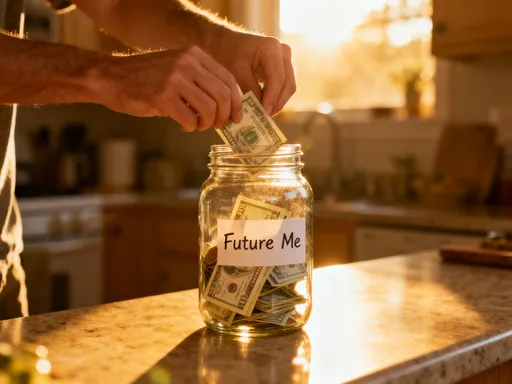
Consistency matters because wealth is built over time, not in isolated moments. Small, regular allocations to aspirational funds compound just like investments. Saving $200 a month grows to $2,400 a year — enough for a significant luxury purchase without debt. Over a decade, that same habit, combined with smart choices, can fund multiple high-value items while maintaining savings and retirement goals. The power lies in routine, not windfalls.
Self-awareness is equally important. Understanding your spending triggers, emotional needs, and personal values helps you distinguish between purchases that serve you and those that don’t. A watch bought to impress others may lose its appeal quickly. The same watch, bought to celebrate a personal achievement, may bring lasting pride. Aligning spending with identity leads to deeper satisfaction and fewer regrets.
Gradual upgrades ensure sustainability. Instead of leapfrogging from budget to luxury in one step, build a ladder of quality. Start with well-made mid-range items, learn how you use them, and upgrade only when it makes financial and practical sense. This approach reduces risk and increases confidence in decisions. Over time, your collection of possessions reflects not just taste, but wisdom — each item chosen with care, used with purpose, and valued for what it contributes.
In the end, the best luxury is not a handbag, a watch, or a vacation. It is financial freedom — the peace of mind that comes from knowing you can enjoy life’s finer things without fear. That freedom isn’t found in deprivation or excess, but in balance. By treating luxury as part of a broader financial strategy, you gain not just beautiful possessions, but control, clarity, and confidence. And that, more than any item, is the ultimate reward.