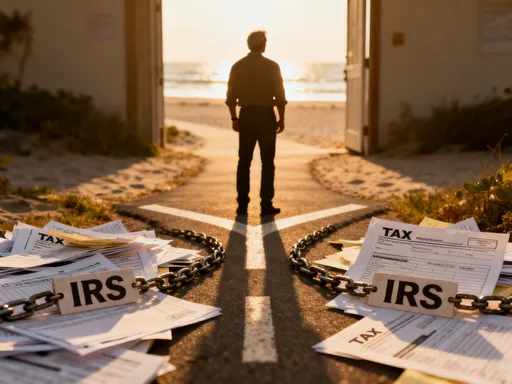
How I Dodged Disaster: Smart Cost Moves After Life’s Curveballs
Accidents happen when we least expect them—car crashes, medical emergencies, sudden repairs. I learned the hard way that financial chaos follows if you’re unprepared. After a painful crash left me drained, I dug into real cost-control tactics that actually work. This is my story of the traps I fell into, the fixes I tested, and what truly saved me money when it mattered most. It wasn't just about cutting corners; it was about making smarter decisions under pressure, understanding systems I'd ignored for years, and rebuilding not just my car or my health, but my entire financial confidence.
The Wake-Up Call: When Life Hits Without Warning
It was a Tuesday morning in early spring when everything changed. I was driving to drop my youngest off at school, the sun just breaking through the clouds, when a delivery van ran a red light. The impact was sudden and violent. My car spun, airbags deployed, and in less than ten seconds, my routine life turned into a blur of sirens, hospital lights, and paperwork. I was lucky—no permanent injuries, just whiplash and a deep sense of shock. But the financial aftershocks were far more damaging than the crash itself.
In the days that followed, I faced a cascade of expenses I hadn’t anticipated. The ambulance ride alone cost over $1,200, even with insurance. The rental car wasn’t fully covered, and the repair shop quoted a bill three times higher than I expected. My deductible was $1,500, and because I hadn’t set aside emergency funds, I had to use a credit card with a 24% interest rate. That single decision—paying quickly without planning—ended up costing me nearly $500 in interest over the next year. I felt helpless, ashamed, and overwhelmed.
What hurt most wasn’t just the money, but the realization that I had no real safety net. I thought I was responsible—I had a job, paid my bills on time, and even contributed to a retirement account. But I hadn’t prepared for disruption. Life doesn’t warn you before it tests your finances. That moment became my wake-up call: financial resilience isn’t about how much you earn, but how well you can absorb a shock without breaking.
The Hidden Traps: Common Financial Pitfalls After Accidents
Looking back, I see now how easily I fell into traps that many people don’t even recognize until it’s too late. The first was assuming my insurance would cover everything. I had auto and health coverage, so I didn’t question the bills that arrived. But insurance rarely pays 100%, and deductibles, co-pays, and non-covered services add up fast. I paid $420 for an MRI that my plan labeled as “out-of-network,” even though the hospital was in-network. That mistake alone could have been avoided with a five-minute phone call.
Another trap was delaying the claims process. I was stressed and distracted, so I waited nearly two weeks to file my auto insurance claim. That delay gave the other driver’s insurer time to argue that my injuries weren’t serious, which nearly led to a denial. I also didn’t know I could dispute the initial offer. They offered $800 for repairs, but after getting a second estimate, I proved the damage required $2,100 in work. By not acting quickly and confidently, I almost left over $1,300 on the table.
Then there was the temptation to pay out of pocket to “keep things simple.” I avoided filing a medical claim for a follow-up visit because I thought it would raise my premiums. But that small decision meant I absorbed a $300 cost entirely on my own. More importantly, it didn’t count toward my deductible, so when I needed physical therapy later, I had to start the deductible clock all over again. Every dollar I paid quietly was a missed opportunity to use the system I was already paying into.
Perhaps the most dangerous trap was relying on high-interest credit. I charged $3,000 to a card to cover the rental car, repairs, and medical co-pays, thinking I’d pay it off in a few months. But with only minimum payments, it took me 18 months to clear the balance, and I ended up paying $670 in interest. That’s money that could have gone into savings or debt reduction. These mistakes weren’t due to carelessness alone—they stemmed from a lack of knowledge, fear of confrontation, and emotional overwhelm. But they were preventable.
Insurance Real Talk: Getting What You Actually Paid For
After the crash, I realized I didn’t truly understand the insurance I’d been paying for years. I knew I had coverage, but I didn’t know how to use it effectively. That changed when I sat down and read my policy documents from start to finish. It wasn’t easy—the language was dense and full of terms like “subrogation” and “co-insurance”—but I highlighted the sections that mattered most: deductibles, coverage limits, and claim procedures.
One of the most important lessons was the value of documentation. I started taking photos of everything: the accident scene, my injuries, the damaged car, and every repair. I kept copies of all medical records, invoices, and communication with insurers. When the claims adjuster tried to argue that my neck pain wasn’t related to the crash, I had medical notes and imaging reports that proved otherwise. Documentation turned uncertainty into evidence, and evidence gave me leverage.
I also learned to file claims immediately. Now, I aim to submit a claim within 24 hours of any incident. Delays give insurers reasons to question legitimacy. I call the claims hotline right away, even if I’m not sure whether I’ll need it. It’s better to start the process and pause it than to miss a deadline. I also ask for a claim number and a point of contact so I can follow up without repeating my story to different people.
Another breakthrough was learning how to negotiate. Insurers often make low initial offers, hoping you’ll accept quickly. When my auto insurer offered $900 for repairs on a $2,500 quote, I didn’t accept. I sent them the repair estimate, photos of the damage, and a polite but firm letter explaining why their offer was insufficient. Within a week, they increased the payout to $2,300. I didn’t yell or threaten—I just presented facts clearly and stood my ground.
Communication matters. I keep a log of every call: date, time, representative name, and summary. If someone promises to send paperwork, I follow up in writing. Emails create a paper trail. I’ve found that being polite but persistent gets better results than anger. Insurance isn’t a favor—it’s a contract. I pay premiums so I can access protection when I need it. Understanding that shifted my mindset from helplessness to empowerment.
Emergency Fund: Why “Someday” Saving Isn’t Enough
Before the accident, I had an emergency fund of about $800. That sounded decent until I faced a $4,000 shortfall. I drained it completely, and still had to borrow. That experience taught me that “someday saving” is not the same as “systematic saving.” I used to think I’d build a real fund once I got a raise or paid off a small debt. But life doesn’t wait for perfect timing.
After the crash, I committed to rebuilding my emergency fund as a non-negotiable expense. I treated it like my mortgage or car payment—something that comes out first, not last. I started small: $50 per paycheck. It didn’t feel like much, but over a year, it became $1,300. Then I increased it to $100, then $150. Now, I have over $6,000 set aside, enough to cover three to four months of essential expenses.
The key was automation. I set up a direct deposit from my paycheck into a separate high-yield savings account. That way, the money never touched my checking account, so I wasn’t tempted to spend it. I also opened the account at a different bank than my primary one, which added a small barrier to impulse withdrawals. Every time I got a bonus or tax refund, I put at least half into the fund.
I also redefined what the fund is for. It’s not for vacations, holiday shopping, or even minor car maintenance. It’s strictly for true emergencies: job loss, medical crises, major repairs, or unexpected travel due to family emergencies. By setting clear boundaries, I stopped dipping into it for non-urgent needs. That discipline made all the difference.
Experts often recommend three to six months of living expenses in an emergency fund, and while that goal felt impossible at first, breaking it into smaller milestones made it achievable. I celebrated each $1,000 saved. Now, knowing that money is there gives me peace of mind I didn’t know I was missing. It’s not just about money—it’s about freedom from panic when the unexpected happens.
Cost-Cutting That Works—Not Just Guessing
In the months after the accident, I had to make real cuts to recover financially. But I didn’t want to sacrifice essentials like groceries, utilities, or my children’s activities. Instead, I focused on reducing costs where I had leverage. The first area was medical bills. I discovered that many providers are willing to negotiate, especially if you ask early and pay promptly.
I called the hospital’s billing department and asked if they offered financial assistance or discounts for upfront payment. They reduced my $1,200 bill by 25% if I paid within 30 days. I also checked if the services were coded correctly. One charge was for a specialist consultation I never saw—a simple error that saved me $180 once corrected. I now review every medical bill line by line before paying.
For car repairs, I got three independent estimates and shared the lowest with my insurer. This gave me a stronger position when disputing their initial offer. I also asked if the shop offered a cash discount or used refurbished parts, which can be 30% cheaper than new ones and still meet safety standards. I chose a shop that guaranteed their work for a year, so I didn’t risk future costs.
I also reevaluated my monthly subscriptions. I canceled two streaming services I rarely used and switched to a cheaper phone plan, saving $75 a month. I renegotiated my internet bill by calling customer retention and asking for a promotional rate—they dropped it by $20 a month for a year. These small wins added up to over $1,000 in annual savings.
Most importantly, I prioritized debt repayment. I used the avalanche method, focusing on the highest-interest debt first (my credit card at 24%). I redirected my savings from cut expenses into extra payments. Within 14 months, I was debt-free from the accident-related charges. I avoided balance transfer scams and payday loans, which promise quick relief but lead to deeper debt. Real cost-cutting isn’t about deprivation—it’s about making informed choices that protect your long-term stability.
Building a Buffer: Smart Financial Shields for the Future
Once I recovered, I wanted to make sure I’d never face that level of financial stress again. I realized that having insurance and an emergency fund wasn’t enough. I needed layers of protection—a financial safety net with multiple strands, not just one.
The first layer was a pre-approved, low-interest credit line. I applied for a personal line of credit at my credit union with a 7.9% APR, much lower than credit cards. I haven’t used it, but knowing it’s there gives me confidence. It’s not for spending—it’s a backup if my emergency fund isn’t enough. I keep the details in my financial binder, so I can act quickly if needed.
The second layer was community resources. I learned that many hospitals offer payment plans with zero interest if you ask. Some local nonprofits provide assistance with utility bills or car repairs for low-to-moderate income families. I didn’t know these existed until I searched after the crisis. Now, I keep a list of local support services saved in my phone and cloud storage.
I also reviewed my insurance coverage and added umbrella liability protection for $150 a year. It gives me an extra $300,000 in coverage if I’m sued after an accident. It’s a small cost for major protection. I also made sure my life insurance beneficiary was up to date and considered disability insurance, which replaces income if I can’t work due to injury.
Another shield was setting up automatic bill negotiation. I now use a reputable bill negotiation service that reviews my recurring expenses—cable, internet, insurance—and asks providers for better rates annually. It costs $4 a month, but last year it saved me $220, so it paid for itself many times over. These layers don’t eliminate risk, but they reduce the impact when life goes off track.
Mindset Over Money: Staying Calm When Bills Pile Up
Perhaps the hardest part of the recovery wasn’t the money—it was the stress. The anxiety of opening envelopes, the guilt of using credit, the fear of not being enough for my family. I made poor decisions when I was overwhelmed: skipping budget reviews, avoiding calls from providers, and pretending the problem would go away. I learned that emotional control is just as critical as financial control.
I started with a simple habit: weekly budget check-ins. Every Sunday evening, I spend 20 minutes reviewing my accounts, tracking spending, and planning for the week. It’s not about perfection—it’s about awareness. That small ritual reduced my anxiety because I always knew where I stood.
I also found a trusted financial advisor through a local nonprofit that offers free counseling. She didn’t sell products—she helped me create a realistic recovery plan and encouraged me when I felt discouraged. Talking to someone neutral made a huge difference. I also confided in a close friend who had been through a similar situation. We checked in monthly, not to complain, but to share progress and accountability.
I began using a simple budgeting app to track expenses in real time. Seeing my spending visually helped me spot leaks and celebrate wins. I set up alerts for low balances and upcoming bills. These tools didn’t manage my money for me, but they reduced mental load and prevented costly oversights.
Most importantly, I practiced self-compassion. I stopped blaming myself for not being prepared. Instead, I focused on what I could do now. I reminded myself that financial setbacks don’t define my worth. Calmness didn’t come overnight, but with routine and support, it became a habit. And with calm came clearer thinking, better decisions, and real progress.
Stronger Than Before
The accident couldn’t be avoided, but the financial meltdown didn’t have to happen. Looking back, I see how a series of small oversights—ignoring policy details, delaying claims, under-saving—turned a physical recovery into a financial crisis. But that pain became my teacher. I now have systems in place that protect me, not just hope.
I have a fully funded emergency account, a clear understanding of my insurance, and a network of financial shields. I negotiate bills confidently, track my spending faithfully, and maintain emotional balance when stress rises. I’m not just surviving—I’m thriving with greater awareness and control.
Life will always bring surprises. But financial disaster doesn’t have to be one of them. By learning the pitfalls, using available tools, and building resilience step by step, anyone can turn a setback into a foundation for strength. You don’t need a perfect plan—you just need to start. And when you do, you’ll find that the most powerful investment you can make is in your own financial peace of mind.